How paintings are built
A classical painting is built, not poured.
A classical oil painting is made over weeks or months, not a single sitting — in a sequence of layers, each with its own purpose and its own physical behaviour. Understand the sequence and you can produce work of remarkable depth from ordinary tubes. Skip it, and you'll produce muddied or cracked pictures however gifted your eye. This is the sequence: imprimatura, dead colour, working layer, glazing, final accents.
A painting is built, not poured. Each layer must dry before the next is laid, as masonry must set before the course above it is added. Max Doerner
01The five layers
- ImprimaturaA thin, transparent wash of warm earth colour — raw umber, burnt sienna, or both — well diluted with turpentine. Kills the glare of the white canvas, gives you a middle-toned surface to work into. Dry overnight.
- Drawing in paintDraw your subject on the dry imprimatura with a small bristle and burnt umber thinned in turpentine. Same block-in as on paper. Correct freely — a rag wipes off wet paint.
- Dead colour (ébauche)The first colour lay-in: blocked in opaquely but with paint thinned to a workable consistency. Largest colour masses, side by side, single value-statement per mass. No modelling, no glazing, no detail. Lean — turpentine only, no medium. Dry at least three days.
- The working layerNow you model. Values refined, colours adjusted, edges considered. The longest stage, and the most rewarding. Paint a little thicker, with a small amount of medium for a buttery body. Fat over lean begins to govern.
- Glazing & final accentsThin transparent films of pigment in oil-rich medium, laid over thoroughly dry opaque layers. Then the smallest accents: the highest highlight in the pupil of the eye, the deepest shadow in the corner of the mouth.
02Glazing — what makes it glow
The glaze is what makes a classical oil painting glow. It is a thin, transparent film of pigment in oil-rich medium, laid over a thoroughly dry opaque layer beneath.
Light passes through the glaze, strikes the opaque layer, and reflects back through the glaze to your eye — picking up the hue of the glaze on the way in and on the way out. The effect is the optical equivalent of looking into a pool of clear coloured water at a pale stone beneath: a depth and luminosity that no opaque mixture can equal.
Glazing is most often used to enrich shadows, to warm or cool a passage that's gone out of temperature, and to deepen the saturation of a colour that's been muddied by white in the underlayer.
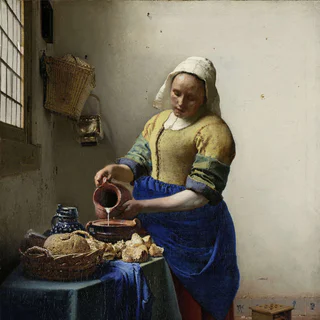
Vermeer · The Milkmaid · c. 1657 · layered glazes over a luminous underpainting
Pigments that glaze
Not every pigment can be glazed. The opaque earths (yellow ochre, Indian red, Naples yellow) will only produce a muddy film. The transparent pigments — ultramarine, viridian, alizarin crimson, burnt sienna, transparent oxide red, terre verte, raw umber — are the painter's glazing colours. Most modern tubes are marked with their opacity on the label.
03How to glaze
- Confirm drynessThe layer beneath must be bone-dry. Press a fingernail in a corner: if it marks, wait longer. Two weeks minimum for thin areas; a month for impastoed lights.
- Prepare the mediumEqual parts stand oil, damar varnish, and gum turpentine — or a commercial glazing medium of similar composition.
- Mix transparentA very small quantity of glazing pigment in a generous amount of medium. The mixture should be transparent enough to read newsprint through, spread thin on a glass plate.
- Lay it downApply with a soft sable in long, deliberate strokes. Wipe back with a clean cloth where the glaze should be most transparent — this is scumbling back.
- Dry thoroughlyBefore the next pass. Patience now is rewarded with luminosity later.
04Scumbling — the silver veil
The opposite of the glaze. A scumble is a thin, semi-opaque film of light paint dragged over a darker layer beneath, letting the underlayer show through in broken patches. Where the glaze deepens and saturates, the scumble cools and softens.
The scumble is how Rembrandt achieved the silvery quality of his finest flesh, and how Vermeer painted his curtains and his pearls.
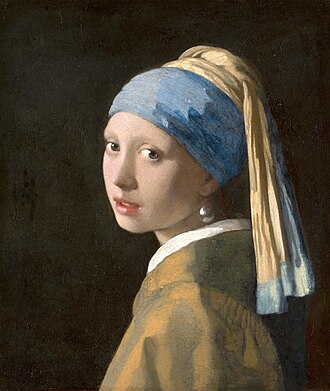
Vermeer
Girl with a Pearl Earring
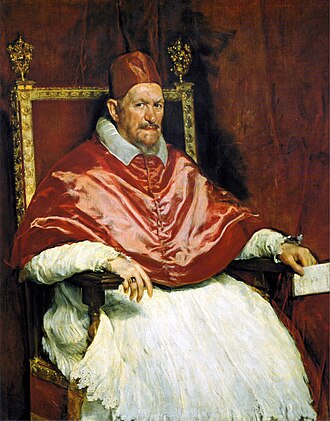
Velázquez
Pope Innocent X
05The three mediums every painter needs
Lean medium
For the early layers. One part stand oil to three parts gum turpentine. Dries quickly, lays thinly, slightly matte.
General medium
For the working layer. Equal parts stand oil, damar varnish, and gum turpentine. Glossy, buttery, slow-drying.
Glazing medium
For transparent passes. Two parts stand oil, one part damar varnish, one part gum turpentine. Honey-thick, slow-drying, jewel-like.
Buy or mix small quantities only — mediums spoil with time. Keep them in dark glass, cap tight.
06The patience of the method
A classical oil painting of any seriousness occupies the easel for four weeks to four months. Much of that span is spent waiting for paint to dry. Hurry it — paint a glaze over a layer that's only surface-dry, or lay a fat impasto over a lean wet underlayer — and you produce a painting that cracks within a generation. Wait, and you produce a painting that lasts five hundred years.
Three paintings at once
Because each layer must dry before the next, the classical painter rarely works on a single picture. The serious studio has three or four canvases in rotation: one drying its imprimatura, one drying its dead colour, one in the working stage, one ready for glazing. A studio that smells faintly of linseed and turpentine is a studio in which paintings are being made.