Apprenticed to the dead
Stand on the shoulders of giants.
Studying the great painters is being apprenticed to the dead. Standing before a finished masterwork in a museum — or before a high-quality reproduction in your studio — you can see in concentrated form what a lifetime of effort makes possible. Each master solved the problems of representational painting in his own way. Copy them in turn and you assimilate a treasury of solutions wider than any single teacher could provide.
The young painter who copies a Velázquez learns more in a week than the young painter who paints from a model learns in a year. Do both. Robert Henri
01How to copy a master
Copying isn't tracing. The aim isn't to produce a counterfeit but to climb inside the master's head and live there for a week.
- Choose one passageA single head, a sleeve, a still-life detail. Not a whole large painting at first.
- Find the best reproduction you canPrint or buy. The bigger and higher-resolution, the better.
- Match the groundPrepare your panel with the imprimatura the master would have used — warm umber for the Flemish, a darker ground for Caravaggio, a luminous white for Vermeer.
- Follow the layersDrawing, dead colour, working layer, glazes. Match not only the look but the sequence as best you can guess it.
- Ask, at every stage, how did he do this?The answer is in the picture if you look hard enough.
02Eight masters worth your time
Caravaggio (1571–1610)
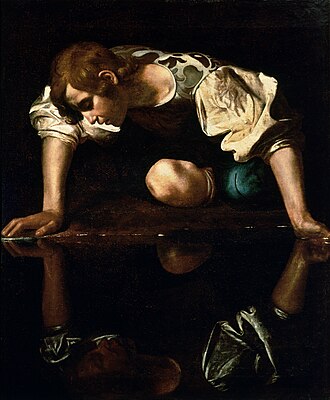
The master of tenebrism — the dramatic chiaroscuro in which figures emerge from deep, almost theatrical black. Caravaggio painted directly on a dark ground without preparatory drawing, locking figures and darkness into a single gesture. He teaches the power of the simple light source, the value of restraint in the shadows, and the courage to leave dark passages dark.

Caravaggio
The Calling of Saint Matthew
Caravaggio
Narcissus
Diego Velázquez (1599–1660)
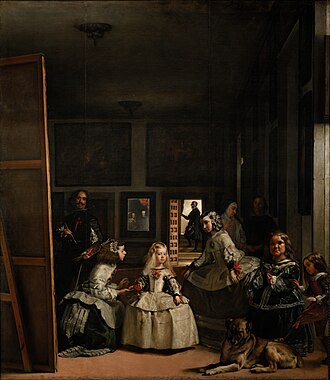
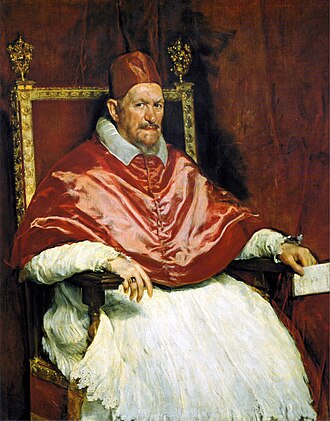
The painter's painter. Worked with extraordinary economy: a head in three or four strokes, a hand in one. Painted alla prima on a grey-brown imprimatura, building the lights up thickly and leaving the shadows transparent and thin. He teaches the value of the single decisive stroke and the futility of fussing. Manet copied him; Sargent copied him; Whistler copied him; every serious painter does.
Velázquez
Las Meninas
Velázquez
Pope Innocent X
Rembrandt van Rijn (1606–1669)
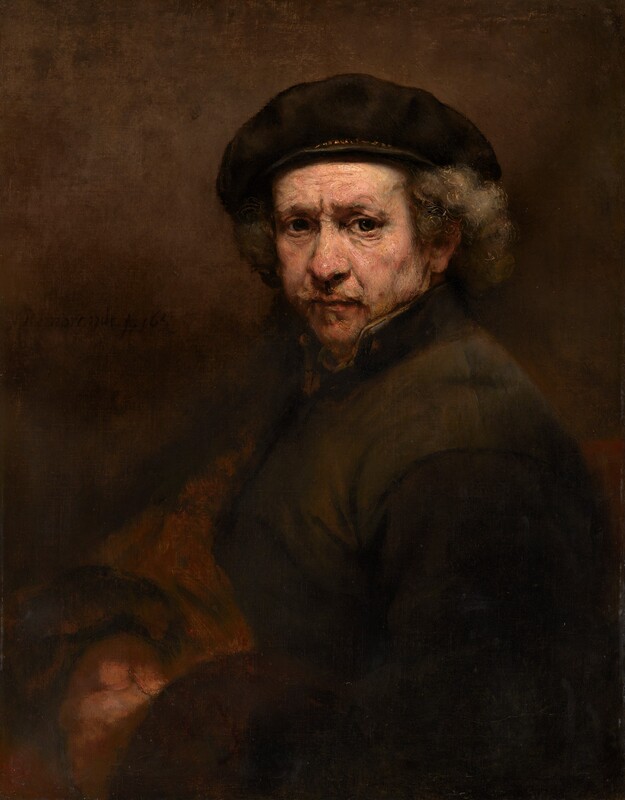
The supreme master of chiaroscuro after Caravaggio, and the greatest psychologist among the painters. His surfaces, in his late work, become an extraordinary topography of impasted lights and glazed darks — the paint itself becomes the form. He used a limited earth palette with great freedom. He teaches glazing, scumbling, impasto, and above all how to look into the human face for what is concealed.
Rembrandt van Rijn
Self-Portrait
Johannes Vermeer (1632–1675)
Painted perhaps thirty-five pictures and changed painting forever. His quiet domestic scenes lit by a single window are made remarkable by an unmatched fidelity to the behaviour of light — the way it falls cool and silvery on a white wall, the way it scatters in tiny highlights on the edge of a bread loaf or a pearl. He teaches the gentle observation of light and the patience to render it.
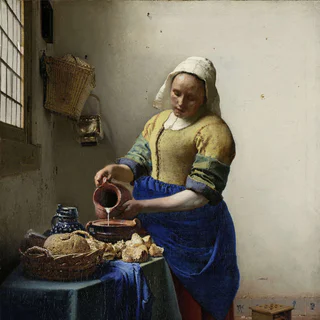
Vermeer
The Milkmaid
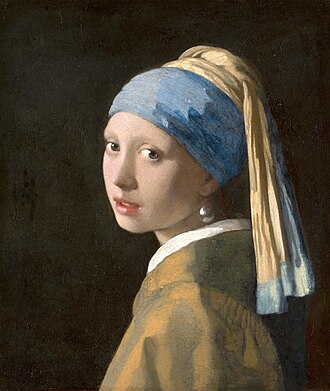
Vermeer
Girl with a Pearl Earring
Jean-Auguste-Dominique Ingres (1780–1867)
The greatest draughtsman of the nineteenth century, and the conscience of the academic tradition. His finished paintings are exercises in precision: the contour drawn with absolute conviction, the modelling refined and refined again. He worked from many preparatory studies — sometimes hundreds for a single composition. He teaches the primacy of the drawing and the value of the long preparation.
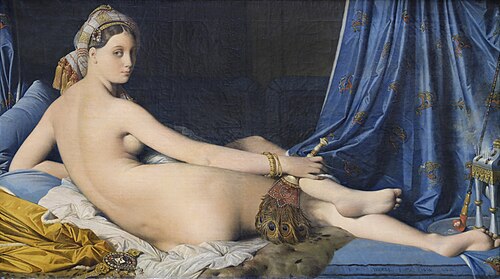
J.-A.-D. Ingres
La Grande Odalisque
William-Adolphe Bouguereau (1825–1905)
The supreme technician of the late nineteenth-century French academy. Worked in the full classical sequence — toned ground, careful drawing, ébauche, multiple working layers, glazing — producing surfaces of an almost porcelain perfection. Reviled by the modernists, now being rediscovered. He teaches the discipline of layered painting brought to its furthest reach, and the standard against which any technical claim must be measured.
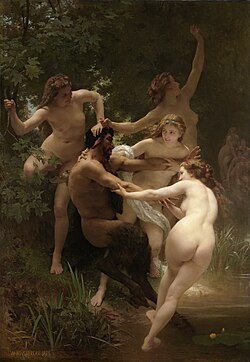
William-Adolphe Bouguereau
Nymphs and Satyr
John Singer Sargent (1856–1925)
The greatest portraitist of his age. Trained in Carolus-Duran's Paris atelier, learned to paint alla prima with extraordinary speed and economy. He painted form directly on canvas, often correcting and rebuilding aggressively, and his surfaces have the freshness of paintings done in a single session even when they weren't. He teaches the value of the well-mixed puddle struck once and left, and the discipline of saying everything in as few strokes as possible.
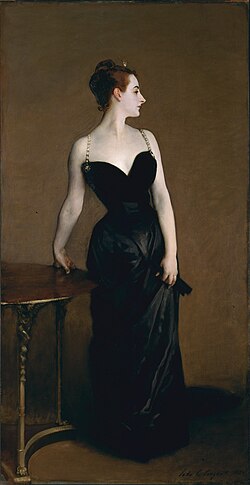
John Singer Sargent
Madame X (Madame Pierre Gautreau)
Joaquín Sorolla (1863–1923)
The Spanish master of light. Painted the Mediterranean sun on bodies, on water, on white linen, with a colour and freedom no painter has surpassed. Worked outdoors, alla prima, on canvases of enormous size. He teaches the courage to paint high-key, the discipline of holding a colour temperature against the dazzle of full sunlight, and the use of paint thick enough to catch the studio light.
03Where to see them
The Prado, Madrid
Velázquez, Goya, Titian, the Spanish royal collection. The single greatest painting museum in the world.
The Mauritshuis, The Hague
Vermeer and Rembrandt, in a small intimate space. The Girl with a Pearl Earring lives here.
The Louvre, Paris
Ingres, David, the French academic tradition; the great Italians; everything else.
Rijksmuseum, Amsterdam
The Dutch Golden Age in one building. Rembrandt's Night Watch and Vermeer's Milkmaid.
The Met, New York
Everything. Sargent's Madame X. Velázquez. Vermeer. Cast galleries. Endless.
The Frick Collection, New York
A small private collection turned museum. Vermeer, Rembrandt, Whistler in domestic-scale rooms.
Museum of Fine Arts, Boston
The Sargent murals. Copley. Vermeer. The Boston atelier tradition's home turf.
National Gallery, Washington
The whole canon in summary, free of charge. Rembrandt's late self-portrait lives here.
The museum sketchbook
Visit with a small sketchbook and a pencil. Stand before a single painting for twenty minutes. Don't photograph it. Make a small thumbnail copy — not for the record, but to force yourself to look at every passage. You'll see ten times more than the tourist with the phone. Twenty minutes before one Velázquez beats two hours wandering through twelve.
I have spent my life copying. Every master in the Prado is an old friend. When I sit down to my own portrait, all of them are standing behind me. John Singer Sargent